Muscle guide
Abs and obliques
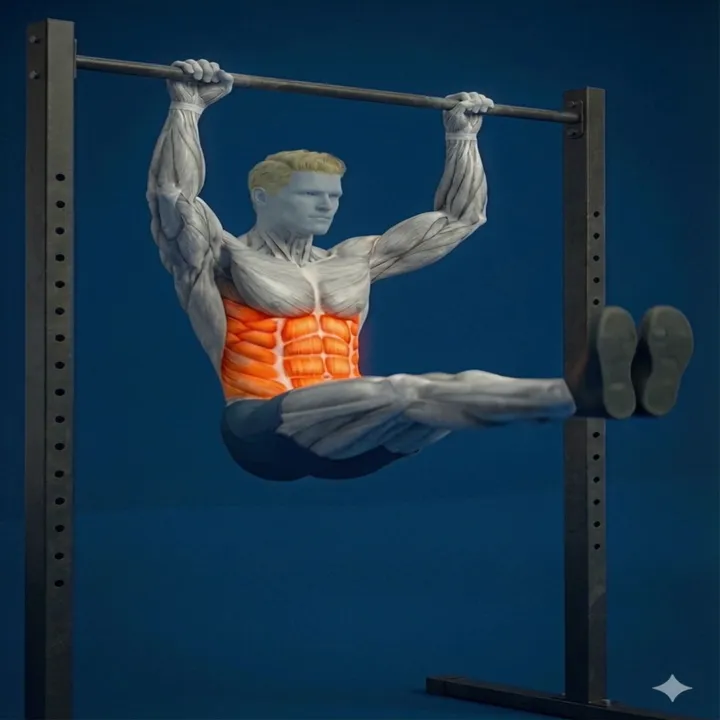
Your core muscles wrap around your middle. The rectus abdominis (the six-pack) bends the spine forward, the obliques bend and twist it, and the deep transversus abdominis braces it. In lifting, their main job is to resist movement.
What it does
- Bends the trunk forward (crunches, leg raises)
- Twists and side-bends the trunk
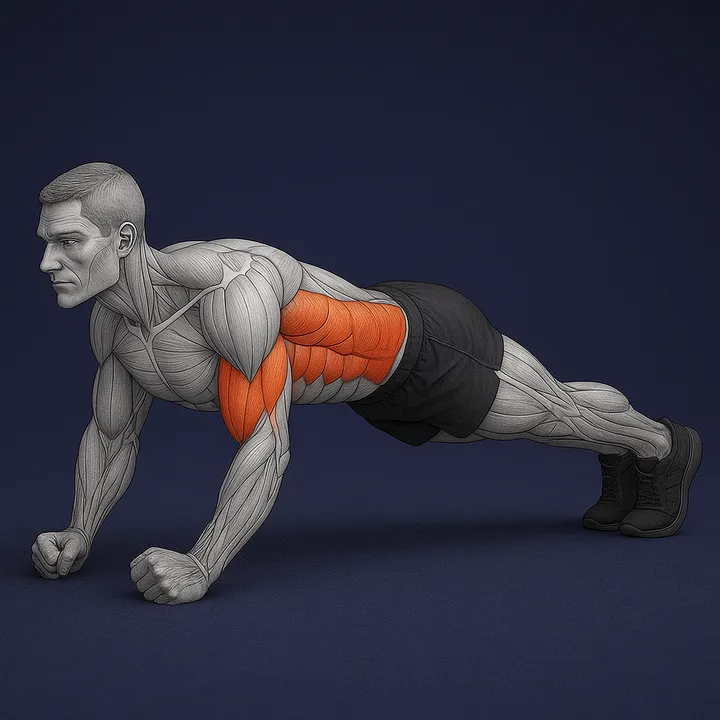
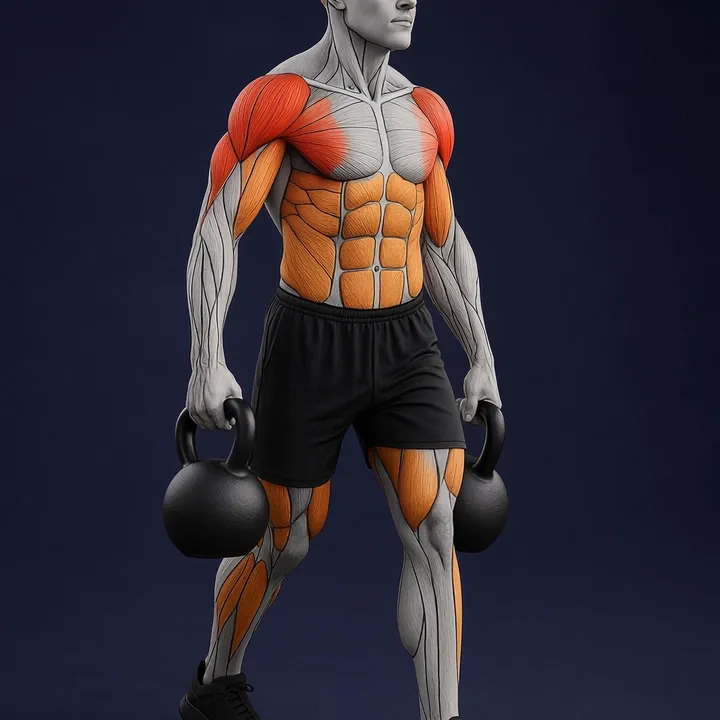
- Resists arching, twisting and bending (planks, carries, heavy lifts)
- Braces the trunk to protect the spine under load
The muscles in it
- Rectus abdominis
- The six-pack muscle down the front. Bends the spine and resists arching.
- External and internal obliques
- On the sides. Twist and side-bend the trunk, and resist twisting.
- Transversus abdominis
- The deepest layer. Tightens like a belt when you brace.
Best exercises
How many sets a week
Squats, deadlifts and overhead presses already train the core a lot. Add about 6 to 10 sets a week of direct ab work, taken close to failure like any other muscle.
Common mistakes
- Doing hundreds of easy crunches.
- Treat abs like any muscle: harder sets of 8 to 20, with added weight when they get easy.
- Expecting ab work to burn belly fat.
- Visible abs come from lower body fat, which is diet and overall training. Spot reduction does not work.
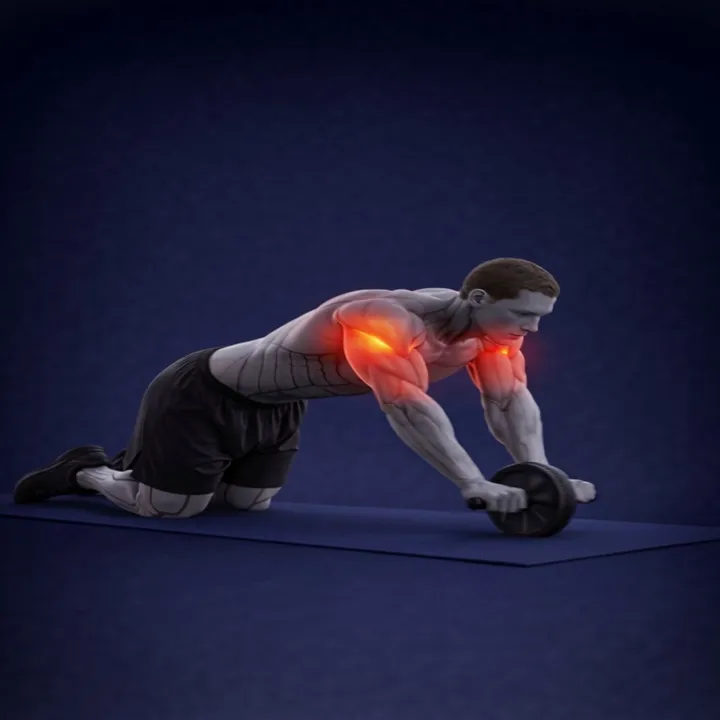
- Letting the lower back sag in planks and rollouts.
- Tuck your pelvis slightly and stop the set when you lose the position.
More exercises that train it
Questions
How do I get a six-pack?
Build the muscle with weighted ab work, then lower your body fat enough to see it. How lean you need to be varies a lot from person to person, and women usually show abs at a higher body fat than men.
Should I train abs every day?
You can, if the sets are light, but harder sessions two or three times a week work better for growth.
Train your abs and obliques with a plan that adapts.
Daptis counts every set you log against the muscles it trains, tracks how sore each one is, and picks today's session from what is fresh and what is due. Free in early access.