Muscle guide
Shoulders
The deltoid caps the top of your shoulder and has three parts, each lifting the arm in a different direction. Presses train the front, raises train the side and pulls train the back, so a complete shoulder plan uses all three.
What it does
- Lifts the arm forward and overhead (front delts)
- Lifts the arm out to the side (side delts)
- Pulls the arm back (rear delts)
- Keeps the shoulder joint stable under load (rotator cuff)
The muscles in it
- Front (anterior) delts
- Lift the arm forward and help in every press, including the bench press.
- Side (lateral) delts
- Lift the arm out to the side. They make the shoulders look wider.
- Rear (posterior) delts
- Pull the arm back. Work in rows, face pulls and reverse flyes.
- Rotator cuff
- Four small muscles that keep the ball of the shoulder centred in its socket.
Best exercises
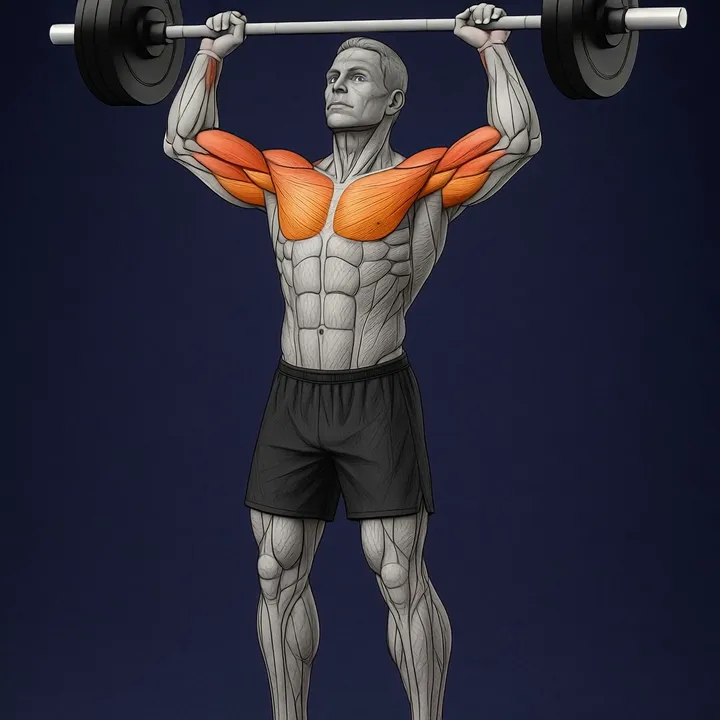 Overhead PressThe main strength lift for the shoulders, standing with a barbell.
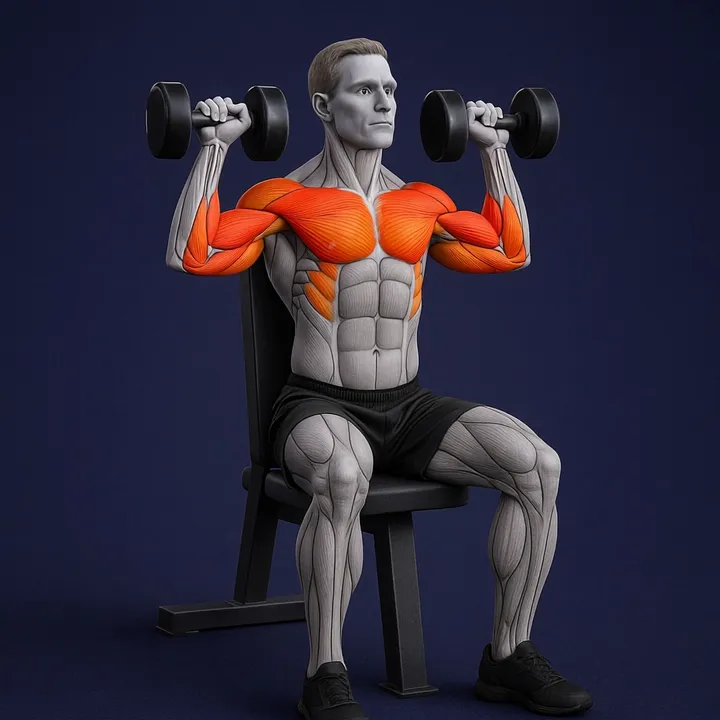 Seated Dumbbell Shoulder PressEasier on the lower back and lets each arm find its own path.
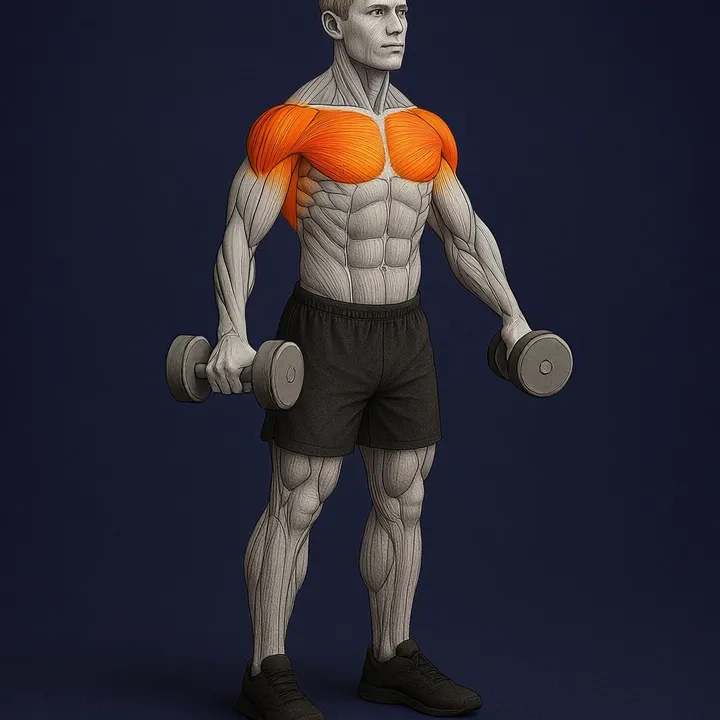 Dumbbell Lateral RaiseThe best direct work for the side delts, which presses barely train.
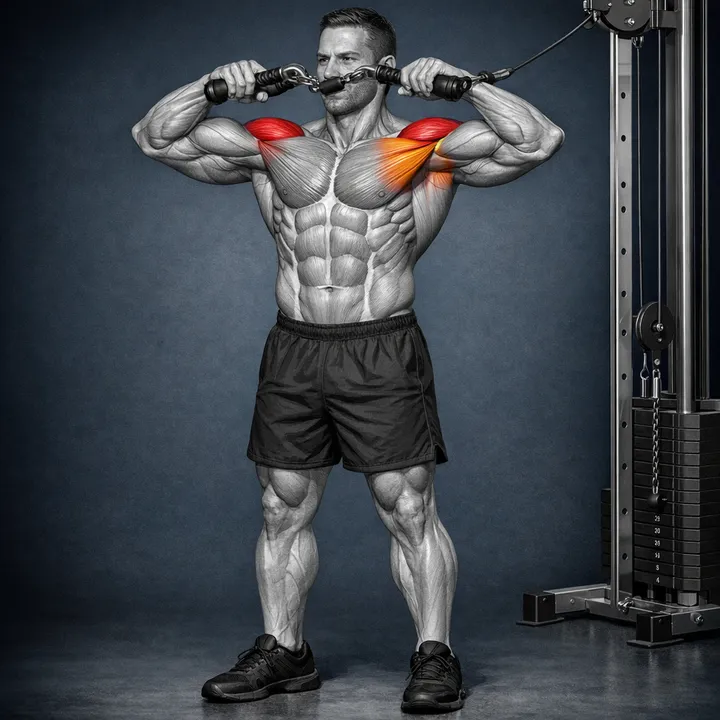 Face PullTrains the rear delts and the muscles that rotate the shoulder out.
How many sets a week
Front delts get plenty from pressing, so most people need no direct front raises. Side and rear delts benefit from about 8 to 16 direct sets a week, split over two or three days. They recover fast.
Common mistakes
- Swinging heavy lateral raises.
- Go lighter and raise with control to about shoulder height. The side delt is small; momentum steals the work.
- Pressing behind the neck with poor mobility.
- Press in front of the face and finish with the bar over the middle of the foot.
- Doing far more pressing than pulling.
- Match pressing with rows and face pulls over the week to keep shoulders healthy.
More exercises that train it
Questions
Do I need to train front delts directly?
Usually not. Bench, incline and overhead pressing all work them hard. Put that time into side and rear delts instead.
Why do my shoulders hurt when I bench?
Often it is flared elbows, a loose upper back or too much pressing volume. Tuck the elbows a little, set the shoulder blades and balance with pulling. Get persistent pain checked.
Train your shoulders with a plan that adapts.
Daptis counts every set you log against the muscles it trains, tracks how sore each one is, and picks today's session from what is fresh and what is due. Free in early access.